
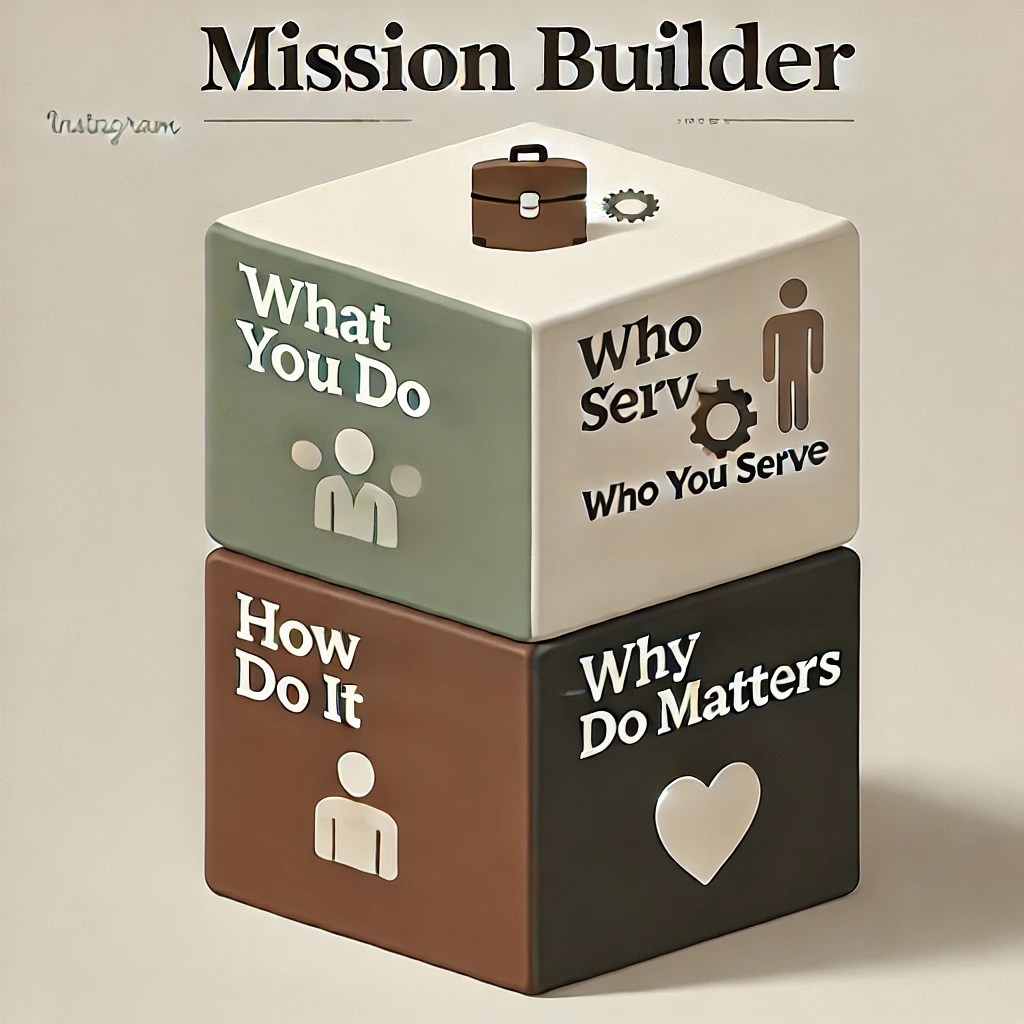
“We [do what] for [who] by [how] so that [why].”
Every successful company knows where it wants to go—that’s the vision.
But not every company knows how to bridge the gap between now and next.
That’s where mission comes in.
What is Mission?
Mission is the day-to-day expression of your vision. It defines:
- What you do
- Who you serve
- How you do it
While vision paints the picture of your desired future, mission grounds you in the present and gives your team a shared sense of purpose.
A strong mission statement is clear, specific, and actionable. It aligns your people, shapes decisions, and creates momentum.
Examples of Strong Mission Statements
✅ Patagonia: We’re in business to save our home planet.
✅ Warby Parker: To offer designer eyewear at a revolutionary price while leading the way for socially conscious businesses.
✅ Charity:Water: We’re on a mission to bring clean and safe drinking water to people in developing countries.
Notice how each of these is more than just aspirational. They’re rooted in action—what they do, for whom, and why it matters.
4 Ways to Develop Your Mission (From Your Vision)
If you already have a vision—your picture of the future—here’s how to translate that into a compelling mission:
1. Start with Your Core Work
Ask: What do we do every day that drives us toward our vision?
Be specific. Describe your product, service, or core value proposition in one sentence.
🧭 Example: “We design sustainable packaging that helps companies reduce waste and connect with eco-conscious customers.”
2. Name the People You Exist to Serve
Ask: Who are we here for?
This could be your customers, clients, communities, or causes you champion. Naming your audience brings clarity.
🧭 Example: “We help local restaurant owners streamline their operations so they can grow with confidence.”
3. Define How You Work
Ask: How do we go about our work in a way that’s different, meaningful, or values-driven?
Include your methodology, your approach, or the cultural values that guide you.
🧭 Example: “Through hands-on consulting and honest conversations, we walk alongside founders navigating seasons of change.”
4. Test It for Clarity and Energy
Ask: Does this mission energize our team? Could we make decisions based on it?
If your mission feels flat or generic, go back and refine. The best missions are clear, compelling, and true to your identity.
Bringing It All Together
Here’s a simple formula to work from:
“We [do what] for [who] by [how] so that [why].”
🧭 Example: “We provide strategic coaching for small business owners by helping them clarify their purpose, develop their people, and grow sustainable impact.”
 scott-lowe.com
Leave a comment